Learn how to choose corporate due diligence services based on your transaction, verification needs, documentation requirements and intended use.

Choosing the right corporate due diligence services begins with understanding what the transaction requires. Customers may need to verify a company’s status, obtain corporate records, investigate potential financial or legal concerns, or satisfy specific documentation requirements. Identifying the underlying objective helps narrow the available options and determine what type of search, record, or documentation may be needed.
What this article covers:
- How to identify the purpose behind a corporate due diligence request
- What to consider when determining the information or documentation needed
- Why the intended use of the results can affect the services required
- When a transaction may involve more than one corporate service
Begin by Identifying What the Transaction Requires
Corporate due diligence can involve several different searches, records, and forms of documentation. The most effective way to narrow those options is to begin by identifying what the customer is attempting to accomplish.
Depending on the transaction, the customer may need to:
- Confirm that a business entity exists or determine its current status
- Obtain documents filed to create, amend, or otherwise change the entity
- Investigate UCC filings, litigation, tax compliance, or other potential concerns
- Obtain documentation for a lender, attorney, government agency, or other third party
- Prepare corporate records for use outside the United States
Although each of these requests may fall under the broader category of corporate services, they can lead to very different searches or documents.
Once the underlying objective is clear, it becomes much easier to identify the type of information or documentation the transaction requires. From there, customers can begin evaluating which corporate services are appropriate for their specific needs.
Consider What You Need to Verify
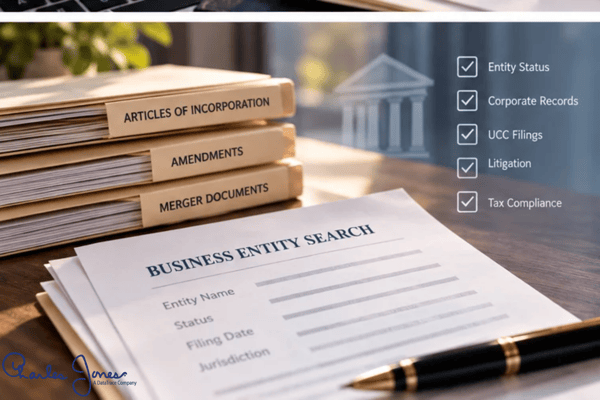
Once the purpose of the transaction is understood, the next step is to identify what information needs to be verified. Corporate due diligence can extend beyond confirming that a company exists, and the appropriate areas of review will depend on the transaction.
Common considerations may include:
- Entity status: Whether the company legally exists and is in good standing with the state
- Corporate records: What documents have been filed to create, amend, merge, or otherwise change the entity
- Financial or legal exposure: Whether UCC filings, litigation, judgments, or other matters may affect the transaction
- Tax or compliance concerns: Whether additional research is needed to address applicable tax or sanctions-screening requirements
These areas of review serve different purposes, and one does not necessarily provide information about another. Confirming an entity’s status, for example, does not reveal whether UCC filings or relevant litigation exist.
Determining what needs to be verified helps define the scope of the due diligence without requiring customers to begin by navigating individual product names.
Determine How the Information or Documents Will Be Used
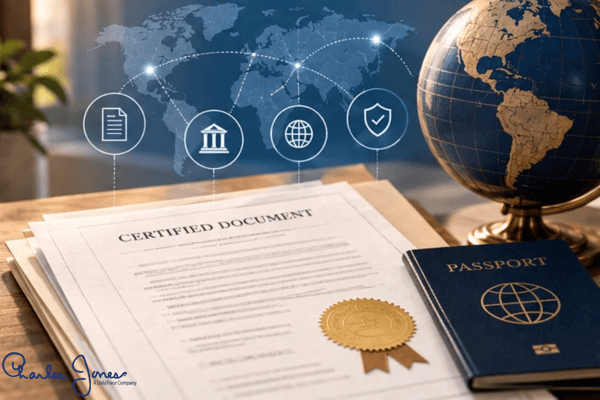
Identifying what information is needed is only part of the decision. Customers should also consider how the search results or documents will ultimately be used.
Information being reviewed internally may have different requirements than documentation being provided to a lender, court, regulatory agency, or government office. In some situations, informational results or plain copies may be sufficient. In others, the receiving party may require certified documents or other formal evidence.
Before ordering, customers should consider:
- Who will receive the information or documents
- Whether formal or certified documentation is required
- Where the documents will ultimately be presented
- Whether additional authentication may be necessary for international use
For documents being used outside the United States, identifying the destination country at the outset is particularly important because authentication requirements can vary.
Understanding the intended use before placing an order can help narrow the available options and reduce the risk of obtaining documentation that does not meet the requirements of the transaction.
Recognize When One Corporate Service May Not Be Enough
Not every transaction can be addressed through a single corporate search or document request. More complex transactions may raise several separate questions, each requiring different information or documentation.
For example, a commercial lending transaction may require customers to:
- Confirm the existence and status of the business entity
- Review relevant corporate records
- Investigate UCC filings involving the debtor or business assets
- Consider additional tax, litigation, or compliance concerns
Each step serves a different purpose. Confirming that a company exists does not identify UCC filings, just as reviewing corporate records does not necessarily address litigation or tax compliance.
The objective is not to order every available corporate service. Instead, customers should identify the questions that matter to the transaction and ensure that each is addressed with the appropriate search, record, or documentation.
Find the Right Charles Jones Corporate Services for Your Transaction
Understanding the purpose of the transaction, what needs to be verified, and how the resulting information or documents will be used can make navigating corporate services significantly easier. The next step is determining which specific products are appropriate for those requirements.
For a more detailed look at the services available through Charles Jones, download Navigating Charles Jones Nationwide Corporate Services: Understanding What to Order, When to Order It, and Why It Matters.
The guide provides practical guidance on commonly requested corporate services and the distinctions that can help customers determine what to order for their specific transaction.