Explore due diligence search types for liens, tax, title, UCC filings and more to identify risks and choose the right search for your transaction.
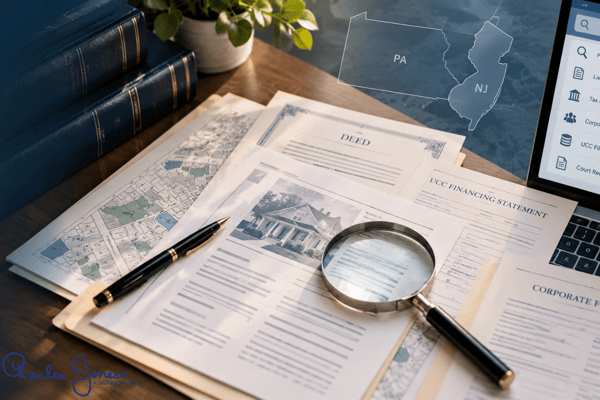
A due diligence search uses public records to verify important information and identify potential risks before moving forward with a transaction. Depending on what you need to uncover, due diligence may involve lien, tax, title, UCC, corporate, court record, and other specialized searches.
What this article covers:
- How to determine which due diligence searches may fit your needs
- When lien, tax, title, corporate, UCC, and court record searches are used
- What different searches can help verify or uncover
- How to navigate the due diligence process and select the proper searches
Start Your Due Diligence Investigation With the Right Questions
An effective due diligence investigation starts by defining what you need to learn—not by choosing a search first. The right searches depend on the transaction, the subject being researched, and the information needed to assess potential issues.
What Are You Trying to Verify or Uncover?
Before beginning the due diligence process, identify the specific questions the investigation needs to answer. For example:
- Are there liens or judgments involving a person or business?
- Are there outstanding taxes or other property-related obligations?
- Who owns a property, and what recorded interests may affect it?
- Is a business entity active and in good standing?
- Are there existing security interests involving business assets?
- Is there pending litigation that may be relevant to the transaction?
- Are there other property-specific or compliance considerations that require research?
Starting with clear questions helps narrow the scope and determine which public records and searches are relevant.
Why the Scope and Jurisdiction of the Diligence Investigation Matter
Public records are maintained by different government offices and at different jurisdictional levels. The records available—and where they must be searched—can also vary depending on the subject and type of information being researched.
A thorough due diligence process therefore considers who or what is being searched, what needs to be verified, and where the relevant records may be maintained. Defining those factors early helps keep the investigation focused and reduces the risk of relying on a search that answers a different question.
Using Public Records to Identify Potential Risks
Public records can reveal different types of information about a person, business, or property. Because no single search provides a complete picture, the proper searches depend on the potential risks and questions involved in the transaction.
Use this quick-reference guide as a starting point:
| If you need to… | Search category to consider |
|---|---|
| Identify judgments or liens involving a person or business | Judgment or Lien Search |
| Check property taxes, assessments, or related obligations | Tax Search |
| Research property ownership and recorded interests | Title or County Search |
| Identify existing security interests involving business assets | UCC Search |
| Verify a business entity or obtain corporate records | Corporate Search |
| Research litigation or other relevant court activity | Court Record Search |
| Determine whether a property is in a designated flood hazard area | Flood Search |
| Investigate potential tideland or wetland considerations | Tideland or Wetland Search |
| Screen names against applicable sanctions or restricted-party records | Patriot Name Search |
These searches answer different questions, which is why a due diligence review may require more than one. The goal is not to order every available search, but to identify the records that are relevant to the transaction and the risks being assessed.
When to Use a Judgment or Lien Search
A judgment or lien search can be an important part of due diligence when you need to identify legal claims or financial obligations involving a person, business, or property. Depending on the scope of the search, records may reveal judgments, bankruptcy records, tax liens, mechanics liens, or other liens that could affect a transaction.
What a Lien Search Can Help Uncover
Liens generally represent a legal claim or interest tied to an obligation. For buyers, lenders, attorneys, and other parties conducting due diligence, identifying relevant liens can help clarify whether another party may have a claim against property or assets involved in the transaction.
Judgments require similar attention. A court judgment may result in a lien against a debtor’s property, making judgment research relevant when assessing obligations that could affect a real estate purchase, lending decision, or other business transaction.
Tax Liens and Other Financial Claims
Tax liens can arise when taxes remain unpaid and a government authority establishes a legal claim against the taxpayer’s property. Depending on the circumstances and jurisdiction, relevant records may include federal, state, or other tax liens.
It is important, however, to distinguish a tax lien search from a property tax search. A lien search looks for recorded claims, while a property tax search can provide information about the tax billing and payment status of a specific property. Understanding the question you need answered helps determine which search—or combination of searches—is appropriate.
Tax Searches for Property Due Diligence
When due diligence involves real property, a tax search can help verify the property’s tax billing and payment status and identify outstanding amounts or other tax-related information that may need attention before a transaction moves forward.
Depending on the search and the records available, this research may provide information about property taxes, assessments, and related municipal or utility obligations. Reviewing these records can help a buyer, lender, title professional, or attorney identify financial obligations that could affect a real estate transaction.
Tax Search vs. Tax Lien Search
Although the terms sound similar, they can serve different purposes. A property tax search can provide information about a property's tax billing and payment status, applicable charges, and municipal tax liens identified in the relevant records. A tax lien search focuses specifically on identifying liens filed because of unpaid tax obligations.
The scope of these searches can vary depending on the jurisdiction and records being researched. Understanding what information you need to verify helps determine which search—or combination of searches—is appropriate.
Title and County Searches for Property Due Diligence
When the due diligence process requires a closer look at real property, title and county searches can help establish ownership and uncover recorded documents or interests that may affect the property. These searches focus on the public records associated with the property rather than solely on the individuals or businesses involved in the transaction.
Chain of Title, Ownership, and Recorded Property Interests
Depending on the scope of the search, property records can provide information about the current owner, ownership history, deeds, mortgages, easements, and other recorded interests.
Reviewing these records helps build a clearer picture of the property's chain of title and record history and can identify matters that may require additional review before a buyer, lender, or other party moves forward with a real estate transaction.
Why Title and Judgment Searches Answer Different Questions
A title or county search and a judgment search may both be part of property due diligence, but they serve different purposes. Title and county research focuses on the property and its recorded history, while judgment research focuses on judgments involving the people or entities connected to the transaction.
Understanding that distinction helps prevent one search from being treated as a substitute for another. When both the property and the parties involved need to be evaluated, multiple searches may be appropriate to provide the necessary information.
When a UCC Search Is Part of Due Diligence

A UCC search can be an important part of due diligence when a transaction involves business assets or secured lending. Under the Uniform Commercial Code (UCC), creditors can file financing statements to provide public notice of a security interest in a debtor’s assets.
Searching UCC filings can help lenders, attorneys, buyers, and other parties identify existing security interests that may be relevant to a loan, asset purchase, or other business transaction.
UCC Search With Listings vs. Copies
The level of detail needed can help determine which type of UCC search is appropriate.
A UCC search with listings provides a summary of filings identified by the search and may be useful when the initial goal is to determine what filings exist.
A UCC search with copies goes a step further by providing the underlying filing documents for review. This can be useful when the due diligence review requires a closer look at information contained within the UCC filings rather than a listing alone.
In either case, the goal is to understand what security interests have been identified in the relevant public records and determine whether they require further review as part of the transaction.
Corporate Searches and Document Retrieval
When due diligence involves a business entity, corporate searches can help verify information about the company, while document retrieval provides access to filings maintained in public records. The right option depends largely on whether you need to confirm an entity’s legal status, review its filing history, or obtain official documentation.
Verifying Entity Status and Good Standing
A status or information report can provide information about an entity when the purpose is research or preliminary due diligence. When formal evidence is required, a Good Standing or Legal Existence Certificate may be appropriate to confirm that the entity exists and, depending on the jurisdiction, has satisfied applicable filing or reporting requirements.
The distinction comes down to information versus official evidence: an informational report may support a diligence review, while a state-issued certificate may be needed when another party requires formal verification.
When Corporate Documents or Certified Copies Are Needed
Corporate document retrieval can provide formation documents, amendments, merger filings, and other records associated with an entity. How those documents will be used helps determine what to obtain.
Plain copies may be sufficient when documents are needed for internal review or research. Certified copies provide certification that the documents are true copies of records maintained by the applicable filing office and may be required when they will be submitted as official documentation.
Determining the purpose of the document review upfront helps ensure the appropriate records—and the appropriate form of those records—are obtained.
Court Record Searches for a More Complete Diligence Investigation
Some potential risks may only become visible when the diligence investigation extends to court records. A court record search can help identify litigation involving an individual or business that may be relevant when assessing a transaction.
This research can complement lien, UCC, corporate, and other public record searches by addressing a different question: Has the person or entity been involved in legal proceedings that warrant further review?
Determining the Appropriate Scope of the Search
The appropriate scope depends on what is being investigated and where relevant records may be maintained. A broader search may be useful when the location of potential court activity is uncertain, while a more targeted search can make sense when the relevant jurisdiction is already known.
Depending on the search and available records, research may identify pending litigation, judgments, bankruptcy information, or other court activity. Because court systems and record availability can vary, defining the subject and appropriate jurisdictions is an important part of conducting the proper searches.
Other Due Diligence Searches to Consider
Not every due diligence review stops with liens, taxes, title, corporate records, or litigation. Depending on the property, transaction, and compliance requirements involved, additional searches may be necessary to address more specialized risks.
Flood Determinations and Life-of-Loan Monitoring
A flood determination identifies whether a property is located within a designated flood hazard area and whether applicable flood insurance requirements may apply. For lenders, life-of-loan monitoring can provide ongoing updates when changes to flood maps affect a property's flood status during the life of a loan.
Tideland and Wetland Searches
Certain properties may require additional research into tideland or wetland considerations. These specialized searches can help identify claims, interests, or environmental designations that may affect the property and warrant further review as part of the transaction.
Patriot Name and Sanctions Searches
When a financial or business transaction involves sanctions-screening or compliance requirements, a Patriot Name Search can be used to screen individuals or entities against applicable government-maintained sanctions and restricted-party records, including records maintained by the U.S. Department of the Treasury’s Office of Foreign Assets Control (OFAC).
These specialized searches illustrate why due diligence should be shaped by the specific risks and requirements of the transaction rather than a standard checklist applied the same way every time.
How to Choose the Right Searches and Make Informed Decisions

There is no universal due diligence checklist that applies to every transaction. The proper searches depend on what is being evaluated, the potential risks involved, and the information required to make informed decisions.
A practical diligence checklist starts with six steps:
- Define the transaction. Identify whether the diligence review involves real estate, lending, an asset purchase, a business transaction, or another matter.
- Identify the subject of the search. Determine whether you need to research a person, business entity, property, or a combination of subjects.
- Clarify what you need to uncover. Pinpoint the questions the investigation must answer, such as verifying ownership, identifying liens, reviewing UCC filings, confirming legal status, or researching pending litigation.
- Determine the relevant jurisdictions. Consider where the applicable public records are maintained based on the subject and information being researched.
- Match each question to the proper search. Select searches based on the information they provide rather than relying on one search to answer unrelated questions.
- Consider whether additional research is needed. Results from one search may identify information that warrants document review, another search, or further investigation.
A thorough due diligence process is ultimately about obtaining the information relevant to the decision at hand. Starting with clearly defined questions makes it easier to conduct focused research, identify potential issues, and determine which findings may require a closer look.
Navigate Due Diligence Searches With Charles Jones
Charles Jones provides public record and due diligence solutions for title, legal, lending, real estate, and business transactions, with services across New Jersey and Pennsylvania as well as nationwide solutions.
Ready to take the next step?
Explore Charles Jones Services & Solutions to find public record searches that fit your transaction.